
Setting Up a Flagstaff Short-Term Rental for Guests
How do you set up a short-term rental in Flagstaff?
Beyond furnishing, a Flagstaff STR needs City-required smoke and CO detectors, a tagged 2-A:10-B:C fire extinguisher, two clear exits (snow and ice included), a posted interior notice, and a plan for fire restrictions. Then plan for the mountain: off-street parking for every guest from November through March, a snow removal plan, freeze protection, dark-sky lighting, and bear-aware trash habits.
Rules and codes last verified September 2026
This is the fun part, and it's also where Flagstaff is different from almost anywhere else you could buy an STR in Arizona. A home that works beautifully in Scottsdale can struggle here if nobody planned for a January storm or a June fire ban.
We own and run two short-term rentals in the Phoenix area, and we own a rental home here in Flagstaff that we lease to Capstone Homes as one of their model homes. We've also helped dozens of Flagstaff clients run the numbers on investment properties and STRs, buy them, and coach them on optimal self-management (so they can maximize profit). This is the setup list we wish every one of them had on day one.
It's part of our complete Flagstaff short-term rental guide.
In this guide
- What the City requires before your first guest
- Winter: parking, snow and pipes
- Fire season
- Dark sky lighting
- Trash, bears and noise
- Helping guests with altitude and mountain driving
- What guests look for
- Insurance and platform protection
- Furnishing and startup budget
- Our setup checklist
- Frequently asked questions
What the City requires before your first guest
Inside Flagstaff city limits, the 2026 update to the STR code requires safety equipment "prior to any rental." Here's the list, straight from City Code Chapter 3-12.
| Item | Where and how |
|---|---|
| Smoke alarms | Working, with battery backup. Outside each sleeping area, inside every bedroom, and on every story, including basements. |
| CO detectors | If the home has a fuel-burning appliance, a fuel-burning fireplace or an attached garage. Outside each sleeping area and within each sleeping unit. |
| Fire extinguisher | At least one rated 2-A:10-B:C, mounted where it's visible and easy to reach, and serviced, inspected and tagged at least once a year. |
| Two exits | Two distinct, unobstructed ways out, clear of furniture, storage, debris, snow and ice. |
| Interior notice | Within 10 feet of the main entrance. Covers special events, winter parking, fire restrictions, trash, your emergency contact and license number, and the human trafficking hotline. |
The licensing steps themselves (TPT license, assessor registration, neighbor notice, the City application) are in Flagstaff and Arizona STR rules, in depth.
Our take
Airbnb's own safety guidance goes a step further and suggests an extinguisher in the kitchen, the garage and on every floor where you can, plus a first-aid kit and an emergency guide with police, fire and hospital information. Those are cheap, and guests notice them.
Winter: parking, snow and pipes
Flagstaff averages 90.1 inches of snow a year at Pulliam Airport, and the record for a 24-hour period is 35.9 inches. Winter is when most of the Flagstaff-specific surprises happen, so this is the section to spend the most time on.
Parking is the sleeper issue
City code bans parking on any City street from midnight to 7am, November 1 through April 1. There are a few named exceptions, but for most homes, that's the rule, and vehicles can be booted or towed.
That means every guest car has to fit in your driveway or garage for five months of the year. When we look at a home with a client, we count real off-street parking spots and set the listing's guest capacity to match. A six-bedroom home with room for two cars is really a two-car home in January.
Snow removal
- Sidewalks within 24 hours. Anyone who owns or occupies property next to a public street has to clear the sidewalk and curb within 24 hours after snow and ice accumulate. If the City has to do it, it bills the owner plus a $50 administrative fee, and it can place a lien if the bill isn't paid.
- Don't push it into the street. It's unlawful to move snow from private property onto a public street.
- Know the plow order. The City plows main arterials, major hills, downtown and bus routes first. Residential streets wait until that's done and more than four inches has piled up. Your guests may arrive before the plow does.
- Keep both exits clear. The STR code's two-exit rule includes snow and ice.
Line up a snow removal company before the first storm, not during it, and decide in advance who shovels walks between plow visits. Some local managers and home-watch companies offer snow removal as an add-on.
Protect the pipes
A frozen pipe you don't hear about until the next guest walks in is one of the most expensive Flagstaff lessons. The American Red Cross recommends:
- Never let the heat drop below 55°F when the home is empty in cold weather.
- Disconnect and drain outdoor hoses, shut the inside valves to outdoor spigots, and open the outside spigots to drain.
- Open cabinet doors under kitchen and bathroom sinks on cold nights so warm air reaches the pipes.
- Keep garage doors closed if water lines run through the garage.
- Insulate attics, basements and crawl spaces.
We'd add two tools that pay for themselves: a smart thermostat you can see from your phone, and water leak sensors near the water heater and under sinks.
Fire season
Fire restrictions usually start in late May or June and lift when the monsoon brings enough rain. In 2026, Stage 1 started May 21, Stage 2 on June 30, and everything lifted July 20. In 2025 they didn't lift until early September. We cover the calendar in Flagstaff STR seasonality.
| Inside city limits | What it means at your STR |
|---|---|
| Stage 1 | Open fire pits and open-flame devices are prohibited. Charcoal and pellet grills, and gas grills and stoves with on/off switches, are still allowed at private homes. |
| Stage 2 | Charcoal and wood-fired barbecues are banned at homes too, along with fire pits and open flames. The STR code requires you to remove, disable or securely lock any fire pit, open-flame barbecue or grill. Gas appliances with a working on/off switch are exempt. |
One gray area we want you to know about: the City's code exempts gas appliances with on/off switches, while the City's 2026 update page says gas and pellet appliances with switches are exempt. If your home has a pellet grill, confirm its status with the City before fire season.
How we'd handle it
- Buy a gas grill with an on/off switch, or plan to lock up anything else.
- Get a lockable cover or lockbox for fire pits and charcoal grills before May, so you're not scrambling when Stage 2 lands.
- Brief every summer guest on the current stage in your check-in message, and point them to the Coconino National Forest fire restrictions hotline at 928-226-4607.
- Get a free home wildfire risk assessment. The Flagstaff Fire Department offers them, focused on defensible space and home hardening. It matters most for homes on the forest edge or with heavy tree cover.
- Put evacuation info in your house manual, including how to sign up for Coconino County Emergency Alerts and how to find the home's evacuation zone.
Dark sky lighting
Flagstaff enacted the world's first outdoor lighting ordinance in 1958 and became the world's first International Dark Sky Place in 2001. Guests love the stars. Neighbors notice porch lights left blazing all night.
Outdoor lighting falls under Zoning Code 10-50.70, most recently amended in February 2026. The key points for a single-family STR:
- Two zones. Zone 1 covers everything within two and a half miles of the U.S. Naval Observatory's Kaj Strand telescope and has tighter rules. Zone 2 is everything else in the City.
- Lumen caps per lot. Our reading of the code's table is 1,500 lumens in Zone 1 and 5,000 in Zone 2 for most fixture types, with some added allowances in Zone 2. Check the table for your specific fixtures.
- Shielding. Fully shielded fixtures (pointing down, no visible bulb from the side) are required in Zone 1 and preferred in Zone 2.
- Motion sensors have to shut off within 5 minutes.
- A permit is required before installing, modifying or replacing covered fixtures.
- Holiday lights can be unshielded and on all night from November 15 to January 15.
For guests, a line in the house manual asking them to turn off exterior lights when they're not using them goes a long way.
Trash, bears and noise
Trash
City code requires trash and recycling carts at the curb by 6am on collection day and back off the curb the same day. Carts go parallel to the street, at least four feet from anything the truck's arm could hit. Guests checking out mid-week won't know your pickup day, so this is a job for your cleaner or manager, not your guests.
Bears
Arizona Game and Fish asks residents in bear country to keep trash inside a secured area until collection day, keep pet food inside, and clean and store barbecues securely. A garage or a bear-resistant enclosure for the carts solves most of it.
Noise
Noise was nearly 40% of the more than 300 complaints about City STRs between November 2024 and March 2026. A few facts worth knowing:
- City noise hours. Flagstaff's noise code restricts noise that's clearly audible inside another home overnight, starting at midnight during the week and 1am on weekends (check Chapter 6-08 for the exact days and hours). There's no citywide 10pm quiet hour. Many hosts set earlier quiet hours in their house rules, and we recommend it.
- Nuisance parties. The code treats gatherings of five or more people that become a nuisance separately, with civil fees from $250 up to $1,000 for repeat offenses.
- No events. Special events are off-limits at City STRs under both state and City law.
- Monitoring helps. Noise and occupancy sensors like Minut ($5 to $15 a month) and NoiseAware ($15 a month) alert you before a neighbor has to.
Helping guests with altitude and mountain driving
Altitude
Flagstaff sits at about 7,000 feet. The Cleveland Clinic notes that acute mountain sickness is rare below 8,000 feet, but some visitors from lower elevations notice the altitude, most often as a headache. A friendly note in your welcome guide to drink extra water and go easy on alcohol the first day or two is a nice touch.
Winter driving
Your winter guests will thank you for clear, specific arrival instructions. ADOT and Discover Flagstaff recommend:
- Checking road conditions by calling 511 or visiting az511.gov before heading up.
- Carrying chains or cables, or using snow tires, especially without four-wheel or all-wheel drive.
- Packing a winter kit: blankets, extra clothes, a flashlight, an ice scraper, a shovel, food, water and a charged phone.
- Never parking on I-17, I-40 or US 180 to play in the snow.
We'd add a photo of exactly where to park, and where the snow shovel and ice melt live.
What guests look for
According to Airbnb's Resource Center, the most-searched amenities are a pool, free parking, wifi, air conditioning or heating, a kitchen, a hot tub, a washer or dryer, self check-in, TV and a BBQ grill.
For Flagstaff, we'd read that list through a mountain lens:
- Free parking is really "enough off-street parking for winter." Say how many cars fit.
- Heating matters far more than air conditioning for most of the year. A cozy, reliable heat source is a selling point.
- A hot tub after a ski day or a cold hike is a big draw. It also needs winter care so it doesn't freeze.
- Fast, reliable wifi for the remote workers who come up for a week or a month.
- Self check-in with a smart lock. Schlage's Encode starts at $299 and Yale's Wi-Fi locks run about $180 to $310.
- A gas grill with an on/off switch, which stays usable through Stage 2.
Airbnb's Guest Favorites badge rewards consistently high ratings for check-in, cleanliness, accuracy, communication, location and value, with at least five reviews and very few host cancellations. Most of that comes down to a clean home, an accurate listing and quick replies.
Insurance and platform protection
Flagstaff requires at least $500,000 in liability coverage, or renting through a platform that provides equal or greater coverage. That's the minimum, not the whole plan.
The National Association of Insurance Commissioners warns that "most homeowners or dwelling insurance policies are not designed to cover accidents arising from short-term rentals," and a paying guest may be excluded from liability protection. So a standard homeowners policy usually isn't enough.
What Airbnb's AirCover does and doesn't do
| What it includes | Worth knowing | |
|---|---|---|
| Host damage protection | Up to $3 million for guest damage to your home and belongings, plus extra cleaning and lost income | Airbnb says it "is not insurance." Excludes normal wear and tear and acts of nature. File within 14 days of the guest's checkout. |
| Host liability insurance | Up to $1 million if you're found legally responsible for injury or property damage to guests or others | Has a list of exclusions, including intentional acts, communicable disease, mold, pollution and auto |
Dedicated STR insurance products exist to fill the gaps. Proper and CBIZ Vacation Rental Insurance market policies built for short-term and vacation rentals, with $1 million in liability, coverage for the building and contents, and loss of rental income. Steadily offers landlord insurance it says covers short-term rentals. We recommend getting quotes from an independent agent who writes STR policies and comparing exactly what each one covers.
Furnishing and startup budget
AirDNA puts typical Airbnb furnishing costs at $10,000 to $20,000, and total startup costs anywhere from $5,000 to $50,000. Those are national ranges. Flagstaff adds a few line items most budgets miss:
- Safety equipment to meet the City code.
- Snow gear for guests: shovels, ice melt, boot trays and a spot for wet gear.
- Freeze protection: smart thermostat, leak sensors and pipe insulation.
- Fire season: a gas grill and a lockable cover for fire pits.
- Dark-sky compliant exterior lights if the current ones aren't.
- A smart lock and noise monitoring.
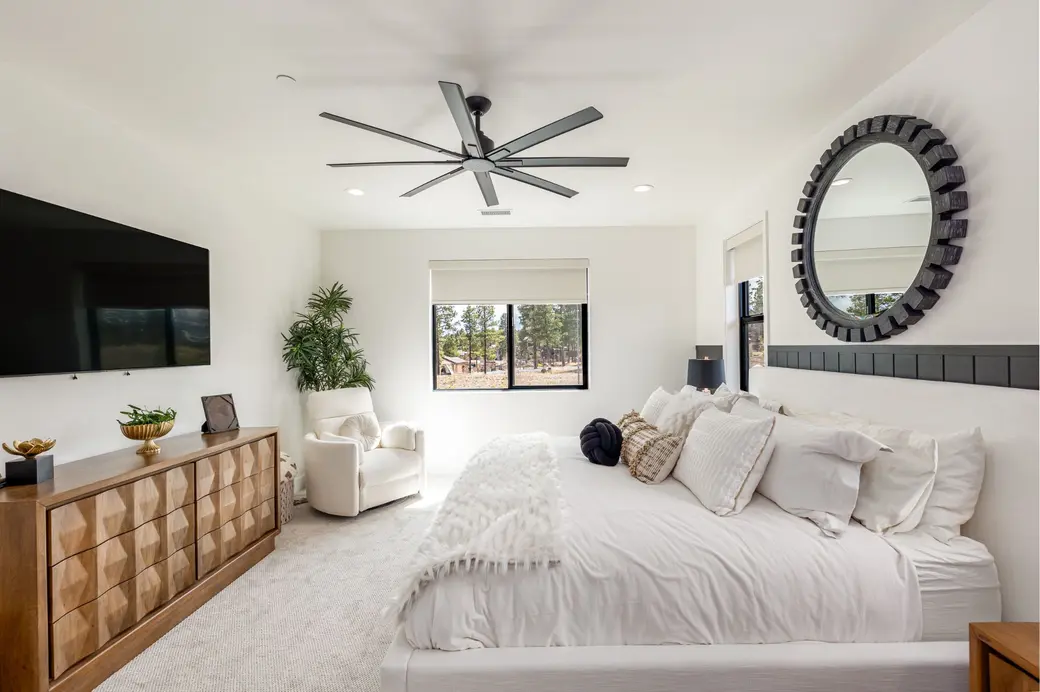
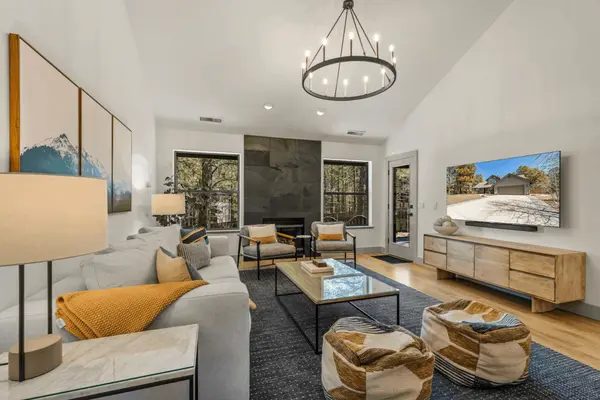
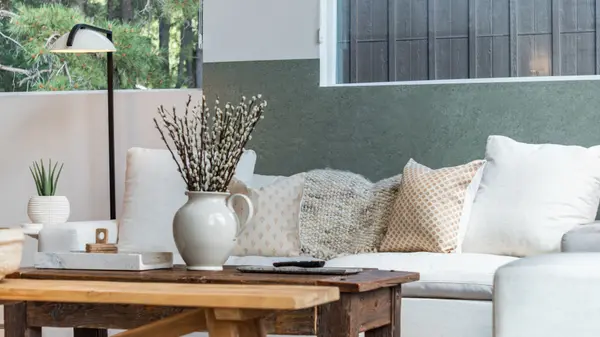
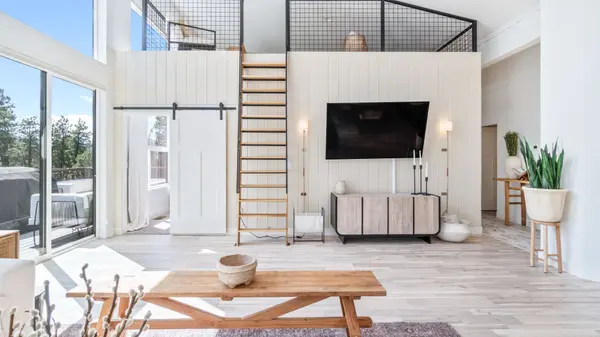
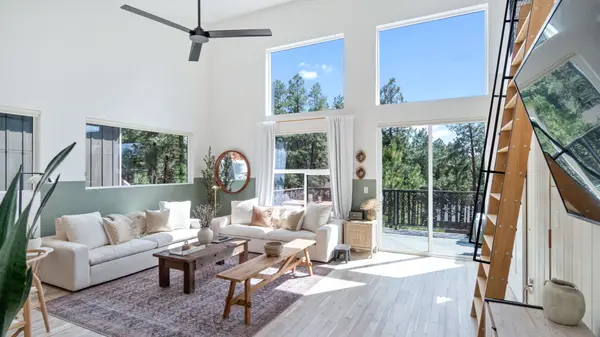
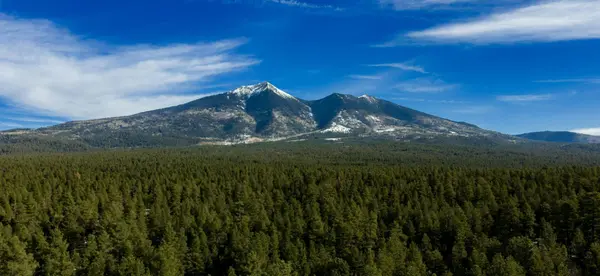
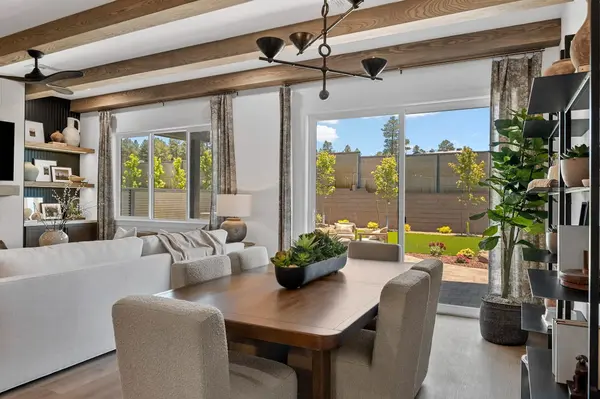
Durable, easy-to-clean furniture pays off. So does thinking about the photos. In our experience, a cozy fireplace and a view of the pines are what get people to click.
Our setup checklist
- Confirm the home can legally be an STR and apply for your licenses. See where you can run one.
- Install the required safety equipment and post the interior notice.
- Set guest capacity to match off-street parking for winter.
- Hire snow removal and decide who clears sidewalks within 24 hours.
- Freeze-proof the home: thermostat minimum of 55°F, leak sensors, outdoor spigots drained.
- Plan for fire season: gas grill, fire pit lock, and a guest message template.
- Check exterior lighting against the dark-sky code.
- Set up trash and bear routines with your cleaner or manager.
- Write house rules and a welcome guide covering quiet hours, parking, trash, altitude and winter driving.
- Get an STR insurance policy and understand what your platform covers.
- Furnish, photograph and launch with your license number on every listing.
Frequently asked questions
Can Airbnb guests park on the street in Flagstaff?
Not overnight in winter. City code bans parking on City streets from midnight to 7am from November 1 to April 1, with a few named exceptions. Plan for every guest vehicle to fit off the street.
What safety equipment does a Flagstaff STR need?
Smoke alarms with battery backup in every bedroom, outside each sleeping area and on every story; CO detectors if the home has fuel-burning appliances, a fuel-burning fireplace or an attached garage; a mounted, annually tagged 2-A:10-B:C fire extinguisher; and two clear exits.
Can guests use the fire pit at my Flagstaff rental?
Not during fire restrictions. Open fire pits are prohibited in city limits at Stage 1, and at Stage 2 the STR code requires owners to remove, disable or lock fire pits and open-flame grills.
Is homeowners insurance enough for a short-term rental?
Usually not. The NAIC warns most homeowners policies aren't designed to cover short-term rental accidents. Flagstaff requires at least $500,000 in liability coverage, and a dedicated STR policy is the safer route.
How much does it cost to furnish an Airbnb?
AirDNA's national estimate is $10,000 to $20,000 for furnishing. In Flagstaff, budget extra for safety equipment, snow and freeze protection, and fire season gear.
Want help getting a Flagstaff STR guest-ready?
We'll walk the home with you, flag what the City requires, and help you plan for parking, snow and fire season before your first booking. Book a call with Brannon and Matt.
More in this series
Sources
- Flagstaff City Code Chapter 3-12 and City STR Ordinance Updates (2026)
- Flagstaff City Code 9-01 (winter parking), 8-03 (sidewalk snow), 7-04 (trash), 6-08 (noise), 10-50.70 (outdoor lighting)
- City of Flagstaff, Snow and Ice Operations and Fire Restriction Stages
- National Weather Service, Flagstaff
- American Red Cross, frozen pipes
- KNAU on 2026 Stage 2 restrictions and Coconino County fire restrictions
- City of Flagstaff, Be Ready and DarkSky International, Flagstaff
- Arizona Game and Fish, Be Bear Aware (August 2025)
- Cleveland Clinic, altitude sickness, Discover Flagstaff, ADOT winter driving
- Airbnb Resource Center: amenities guests want, Guest Favorites, AirCover for Hosts; Help Center articles 279 and 937
- NAIC on home-sharing insurance
- AirDNA on furnishing costs and startup costs
This guide is general information, not legal or insurance advice. Codes and fire restrictions change, so confirm current rules with the City, the County and your insurance agent.
Categories
Recent Posts
Let's talk through your plan