
Flagstaff and Arizona Short-Term Rental Rules, In Depth (2026)

What are the short-term rental rules in Flagstaff, AZ?
Inside city limits, every STR needs its own $250 annual City license, an Arizona TPT license, written neighbor notice, a 24-hour emergency contact who can respond within 60 minutes, $500,000 in liability coverage, a sex offender registry check before each stay, and specific smoke, CO and fire safety equipment. The rules were last updated by Ordinance 2026-11.
Rules last verified September 2026
Most STR rule summaries online are a year or two behind. Flagstaff amended its short-term rental chapter in May 2026, and the new insurance, background check and safety requirements took effect July 1, 2026. If you're working from an older checklist, you're probably missing something.
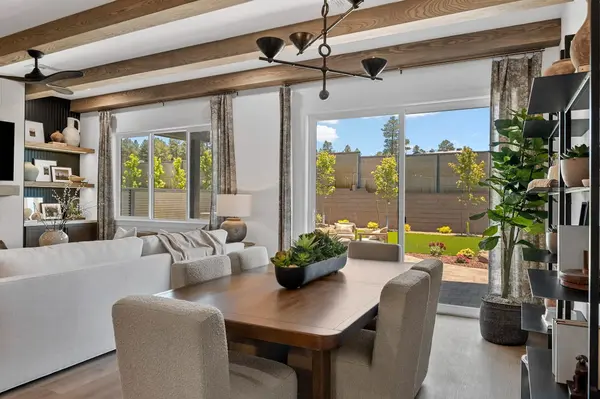
We own and run two short-term rentals in the Phoenix area, and we own a rental home here in Flagstaff that we lease to Capstone Homes as one of their model homes. We've also helped dozens of Flagstaff clients run the numbers on investment properties and STRs, buy them, and coach them on optimal self-management (so they can maximize profit). We read the actual code for this guide, section by section, so you don't have to.
This is part of our complete Flagstaff short-term rental guide, and it's the deepest dive on the rules themselves.
In this guide
The state framework
Every Flagstaff rule sits on top of one state law, A.R.S. 9-500.39. It does two things at once. It stops cities from banning STRs, and it gives them a specific list of tools they're allowed to use.
The key lines: a city "may not prohibit vacation rentals or short-term rentals," and it can't regulate them "based on their classification, use or occupancy" except as that statute allows. There's no authority for caps on the number of STRs, density limits or minimum stays.
Here's what cities can do:
- Health and safety rules, like fire and building codes, sanitation and traffic.
- Zoning, noise and nuisance rules, as long as they apply the same way to other homes.
- A permit or license, with a fee capped at the lesser of the City's actual cost or $250.
- Emergency contact, neighbor notice and advertising requirements.
- $500,000 in liability insurance, or listing through a platform that provides equal coverage.
- Owner residency for newer ADUs, when the ADU's certificate of occupancy was issued on or after September 14, 2024.
How we got here
| Year | Law | What it did |
|---|---|---|
| 2019 | HB2672 | Banned special events and commercial uses, created "verified violations," required citation notice within 7 business days |
| 2022 | SB1168 | Allowed city licenses with the $250 cap, neighbor notice, $500,000 insurance, tiered penalties and suspension up to 12 months |
| 2024 | HB2720 | Allowed cities to require owner residency on properties with newer ADUs |
| 2025 | HB2928 | Tied the ADU rule to the certificate of occupancy date and extended it to counties |
The Flagstaff license, section by section
Flagstaff's rules live in City Code Chapter 3-12. It was rewritten in 2023 (Ordinance 2023-16) and amended May 19, 2026 (Ordinance 2026-11). It applies inside city limits only. Not sure which side a home is on? Start with where you can run an STR in Flagstaff.
What counts as an STR
Any house, one-to-four unit building, ADU, or condo or co-op unit offered for stays of fewer than 30 days. Each STR needs its own license. An online listing showing the home as available is treated as evidence it's operating, so a live listing without a license is a problem even before your first guest.
What the application asks for
- The property address and your contact information, plus any designee who acts for you.
- Your emergency point of contact. This is public information and appears on the City's STR map.
- Your Arizona TPT license number with the location code for this property.
- Your neighbor notification plan, with full addresses.
- Attestations that you'll comply, and that you and your designees aren't registered sex offenders and have no felony conviction in the past 5 years involving death, serious injury or a deadly weapon.
- Proof of lawful presence in the United States, as state law requires for City licenses.
- The $250 annual fee, which is non-refundable and isn't prorated.
State law gives the City 7 business days to approve or deny. It can only deny for a short list of reasons: missing information, an unpaid fee, false information, a current suspension, or the sex offender and felony grounds above. A denial can be appealed to the City Manager within 10 calendar days.
Term and renewal
A license is good for one year from the date it's issued and renews through your online account. It can't be transferred or assigned. That's the one buyers trip on: when you buy an operating STR, the seller's license doesn't come with it. You apply fresh.
$250
annual City license fee, up from $185, and the most state law allows
7
business days for the City to approve or deny
60
minutes for your emergency contact to respond to police
1,055
licensed City STRs in 2026, up from 573 registered in 2021
Sources: Flagstaff City Code Chapter 3-12; A.R.S. 9-500.39; Flagstaff Business News (August 2026).
What's required once you're open
Neighbor notice
Before your first guest, you give written notice to the single-family properties next to you, directly across the street and diagonally across the street. In a multifamily building, it's the units on your floor. Written notice can be electronic, certified mail or hand delivery.
The notice includes your City license number, the rental's address, and your emergency contact's name, address, email and 24-hour phone number. If your emergency contact changes, you re-notify within 10 days. Your application includes a neighbor notification plan with full addresses, and you have to be able to attest to the notices on request, so keep copies.
Your emergency contact
When a police officer asks, your emergency contact has to be at the property, or reachable by phone or text, within 60 minutes for an emergency. The code gives examples like crime scenes, biohazards and public safety threats. Failing to provide or keep a contact can cost $1,000 for every 30 days after written notice. If you live out of town, this is usually the first reason to hire a local manager. We compare the options in management options and what they cost.
Listings
Your City license number goes on every ad. Separately, state law requires your TPT license number on each advertisement, and if a platform has no field for it, it goes in the property description.
The interior notice
Within 10 feet of the main entrance, inside the home, you post a notice that covers:
- No special events or nonresidential uses.
- Winter parking. No parking on City streets from midnight to 7am, November 1 to April 1.
- Fire restrictions and the fire pit and grill rule.
- Trash. Containers at the curb by 6am on pickup day and brought in the same day.
- Your emergency contact and City license number.
- The human trafficking hotline, which the City can require.
Insurance, background checks and safety (new July 2026)
| Requirement | What the code says |
|---|---|
| Liability insurance | At least $500,000 aggregate, or rent through a platform that provides equal or greater coverage |
| Guest check | No later than 24 hours before every stay, check the person booking against the U.S. Department of Justice's National Sex Offender Public Website. Keep records 12 months. Waived if the platform runs the check, but the platform's failure doesn't relieve you. |
| Smoke alarms | With battery backup, outside sleeping areas, in each bedroom, and on every story including basements |
| CO detectors | Where the home has fuel-burning appliances, a fuel-burning fireplace or an attached garage |
| Fire extinguishers | At least 2-A:10-B:C, mounted, serviced and tagged every year or after each use |
| Exits | At least two unobstructed ways out, clear of furniture, storage, snow and ice |
| Stage 2 fire restrictions | Remove, disable or lock any fire pit, open-flame barbecue or grill. Gas appliances with a working on/off switch are exempt. |
What you can't do
STRs can't be used for special events that need a permit, or for retail, restaurant or banquet use. The code also bars housing sex offenders, sober living homes, drug sales and adult-oriented businesses, and any use that breaks zoning, lighting, building, fire, health or noise rules. Group homes for people with disabilities are an exception.
Worth knowing what's not in the code, too. Chapter 3-12 has no occupancy cap and no on-site parking requirement. Your HOA may have both, and winter parking rules make parking a practical limit either way.
Complaints, penalties and suspension
Neighbors filed more than 300 complaints about City STRs between November 2024 and March 2026, and nearly 40% were about noise, according to Flagstaff Business News. The City now takes complaints through an online form, and the public STR map shows every licensed STR's emergency contact.
Penalties
Penalties apply to "verified violations," meaning a final finding of guilt or civil responsibility, not just a complaint. Flagstaff's code sets flat amounts per STR in any 12-month period:
City of Flagstaff penalties per verified violation
They escalate fast within 12 months
Source: Flagstaff City Code 3-12-001-0015. State law allows the greater of these amounts or one, two or three nights' rent; Flagstaff's code uses the flat amounts.
There's some fairness built in. Several violations from one incident count as one. Advertising or neighbor-notice violations within 30 days count as one once you fix them. Separately, operating without a license can cost $1,000 a month if you don't apply within 30 days of written notice.
Suspension
The City can suspend a license for up to 12 months for three verified violations in 12 months. Aesthetic, trash and parking violations don't count toward that unless they're a serious threat to health and safety. A single verified violation can also trigger suspension if it involves a felony, serious injury or death, knowingly housing sex offenders, or knowingly allowing special events or commercial use.
Your right to a hearing
A notice of violation has to tell you what the violation is, the code sections, the penalty, how long you have to fix it, and your right to a hearing. Request the hearing within 10 calendar days or you lose the right. An independent hearing officer hears it, the City has the burden of proof, and the written decision comes within 30 days. An appeal of a suspension doesn't pause the suspension.
Watch out for
The owner stays responsible for the designee. If your manager or cleaner doesn't handle something, the violation is still yours. That's why we ask every manager our clients consider exactly how they handle registry checks, noise calls and the 60-minute response.
State tax licensing and assessor registration
Your TPT license
Arizona requires every STR owner to have a transaction privilege tax license before offering a home for rent, even when Airbnb or Vrbo collects and pays the tax for you. The Department of Revenue's fact sheet says it directly: an owner "may not offer for rent or rent a lodging accommodation without first obtaining a current TPT license."
When a platform remits tax for you, you still report that income on your return and deduct it (code 775 for short-term lodging), backed by Form 5018 from the platform. Advertising without a TPT license can cost $250 for a first offense and $1,000 after that. Rates, filing schedules and the rest of the tax picture are in what a Flagstaff STR really earns.
Assessor registration
Every residential rental in Arizona has to be registered with the county assessor under A.R.S. 33-1902: owner name and contact information (and officer or member contacts for an LLC), the address, parcel number and year built. The fee is $10 or less, and you update it within 10 days of any change.
The penalty for a newly bought property is $1,000 plus $100 a month, waived if you comply within 10 days of a notice. It's the cheapest box on this list to check and one of the easiest to forget.
Unincorporated Coconino County
Kachina Village, Mountainaire, Munds Park, Doney Park and other areas outside city limits follow Coconino County Ordinance 2023-22, adopted unanimously in August 2023 and effective November 14, 2023.
| County requirement | The details |
|---|---|
| Permit | Annual, $250. Renewal requires a new application. |
| TPT license | Required first |
| Neighbor notice | Adjacent, across-the-street and diagonal parcels, including vacant ones |
| Emergency contact | Available 24 hours |
| Complaint response | Respond to non-emergency complaints within 72 hours |
| Insurance | $500,000. The County FAQ says Airbnb's $1 million coverage satisfies it if the home is listed only on Airbnb. |
| Eligible dwellings | Lawfully permitted single-family dwellings only. No RVs, tents, trailers or sheds. |
| Other | Exterior photo of the property. No parties or large events like weddings. |
The County reported strong compliance about a year in. More than 1,000 permits had been approved, about 926 were active, and six $1,000 fines had gone out for failing to register. The County's STR complaint line is 928-679-8856, weekdays 8am to 4pm. Apply and learn more on the County's STR page.
Sedona, Williams and Page
Each of these cities has its own STR program under the same state law. We confirm the current rules directly with the city for any property there rather than summarizing them here.
HOAs and the courts
State law limits what governments can do. It doesn't limit private agreements. Arizona's planned community and condo statutes both say an owner can rent "unless prohibited in the declaration," and has to follow the declaration's rental time periods. As a March 2026 article from CAAR, an Arizona REALTOR association, put it, state law "does not give owners the right to ignore private restrictions."
What the courts have limited is adding restrictions later:
| Case | What it held |
|---|---|
| Kalway v. Calabria Ranch HOA, Arizona Supreme Court, 2022 | An HOA can use a general amendment power only for restrictions the original declaration gave owners notice of. Amendments can't be "entirely new and different in character." (Not an STR case, but it's the foundation for the ones below.) |
| Village of Oak Creek Association v. Bonham, Court of Appeals, 2023 | A 2016 amendment restricting STRs couldn't be enforced under a 1981 declaration that had no such restriction. Reported as holding that STRs are a residential use, not a commercial one. |
| Gross v. Shores at Rainbow Lake, Court of Appeals, 2024 | A new 30-day minimum lease was invalid because it imposed entirely new obligations. The same amendment's four-unrelated-occupant limit was upheld. |
So a rental restriction in the original declaration generally holds, and a new one added later may or may not, depending on what the original documents foresaw. That's a question for the documents and, when a deal depends on it, a real estate attorney.
The statutes also limit what an association can ask of a rental owner: occupant names and contact information, the dates of the stay, and vehicle descriptions and plates, with a fee of no more than $25 per new tenancy.
What's changed, and what might
Cities, including Flagstaff, have asked the Legislature for more local control for years. Two 2026 bills would have given it. HB2429 would have allowed occupancy limits of two per bedroom and suspension after three violations in 24 months. It passed the House 37 to 14 in March 2026 and then stalled in the Senate. SB1076 would have allowed caps and spacing rules in cities under 70,000 people, and it died early. Neither became law, and the session adjourned June 13, 2026.
The HOA bills that did pass in 2026 take effect September 12, 2026, and none of them deal with rentals.
Our take
The rules have tightened a little almost every couple of years, and some version of these bills will likely be back. We don't think that's a reason to avoid Flagstaff STRs. We think it's a reason to buy a home that still works as a mid-term or long-term rental, run it well enough that neighbors never need the complaint form, and keep your license, notices and records clean.
Frequently asked questions
Do I need a license to run an Airbnb in Flagstaff?
Yes. Inside city limits, every STR needs its own City of Flagstaff license, renewed yearly for $250, plus an Arizona TPT license. Unincorporated areas need a Coconino County permit instead.
Does a Flagstaff STR license transfer when I buy a home?
No. City licenses are non-transferable, so a buyer applies for a new license even if the home was already operating as an STR.
What are the fines for an unlicensed STR in Flagstaff?
If you don't apply within 30 days of the City's written notice, it can cost $1,000 per month. Verified violations of the STR rules run $500, $1,000 and $3,500 for the first, second and third within 12 months.
Does Airbnb's coverage satisfy Flagstaff's $500,000 insurance rule?
The City's code accepts rental through a platform that provides equal or greater coverage. Platform programs have exclusions, so we recommend reviewing what they cover with an insurance agent rather than relying on them alone.
Is there an occupancy limit for Flagstaff STRs?
The City code doesn't set one. Your HOA may, and a 2026 bill that would have allowed cities to limit occupancy to two per bedroom didn't pass.
Want a second set of eyes on the rules for a specific home?
We'll confirm the jurisdiction, walk through the licensing steps with you, and flag anything in the HOA documents before you're committed. Book a call with Brannon and Matt.
More in this series
Sources
- Flagstaff City Code Chapter 3-12 and City of Flagstaff, STR Ordinance Updates (2026)
- A.R.S. 9-500.39, A.R.S. 33-1902, A.R.S. 33-1806.01, A.R.S. 33-1260.01
- Arizona session laws: 2019 Ch. 240, 2022 Ch. 343, 2024 Ch. 196, 2025 Ch. 217
- Arizona Department of Revenue, Online Lodging fact sheet FS-25-01
- Coconino County, Short-Term Rental Information and County STR FAQ
- Flagstaff Business News (August 2026)
- Kalway v. Calabria Ranch HOA (2022), Gross v. Shores at Rainbow Lake (2024), coverage of Village of Oak Creek v. Bonham (2023)
- CAAR, Short-term rentals in Arizona: where state law ends and CC&Rs begin (March 2026)
- Arizona Capitol Times on HB2429 (April 2026) and SB1076 on LegiScan
This guide is general information, not legal or tax advice. Rules change, so confirm current requirements with the City, the County, ADOR and your own advisors.
Categories
Recent Posts

Let's talk through your plan