
Moving to Flagstaff from Phoenix or Scottsdale: What to Know
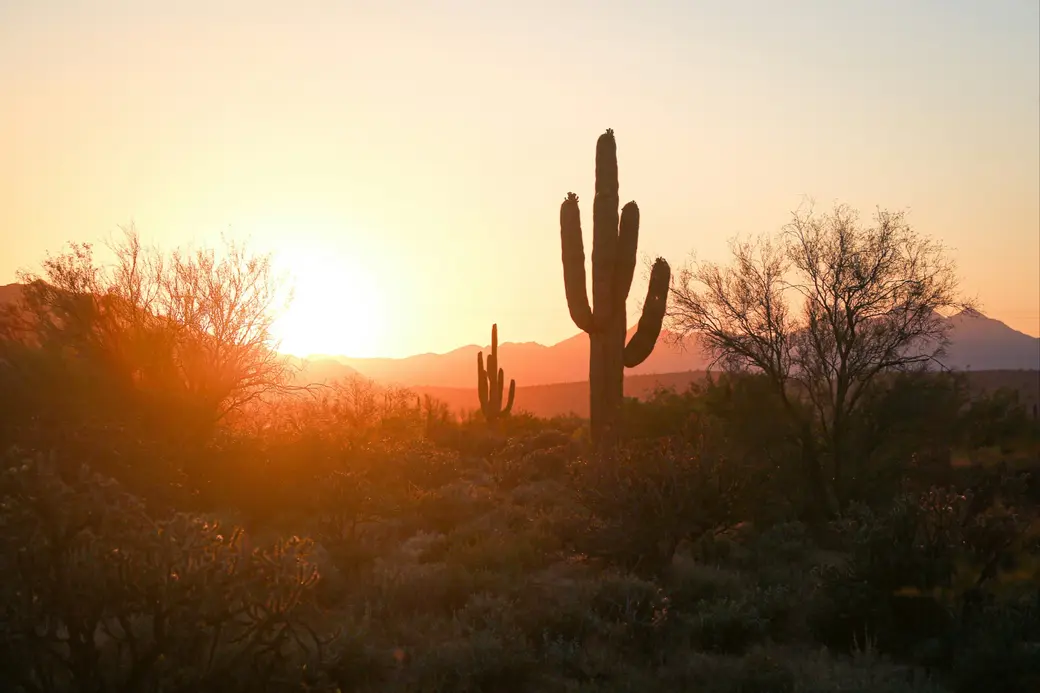
What's it like to move to Flagstaff from Phoenix or Scottsdale?
You trade about 6,000 feet of elevation for real winters, cool summers and a smaller mountain town about 142 miles up I-17. Homes cost more than in Phoenix and less than in Scottsdale. Redfin put Flagstaff's median sale price at $699,537 for the three months ending August 2026, vs $455,000 in Phoenix and $906,900 in Scottsdale. Your state income tax doesn't change. Your winter routine does.
Data last verified October 2026
This is our favorite kind of move to help with. A lot of the buyers we work with are coming up from Phoenix and Scottsdale, some full-time and some part-time, and almost all of them are chasing the same thing: cooler summers, pine trees and a slower pace that still feels close to the Valley.
We've helped a lot of Valley buyers make this move, and the questions they ask are remarkably consistent. This guide answers them in simple English, with the numbers we'd want if we were the ones packing.
It's part of our complete guide to moving to Flagstaff.
In this guide
The weather, side by side
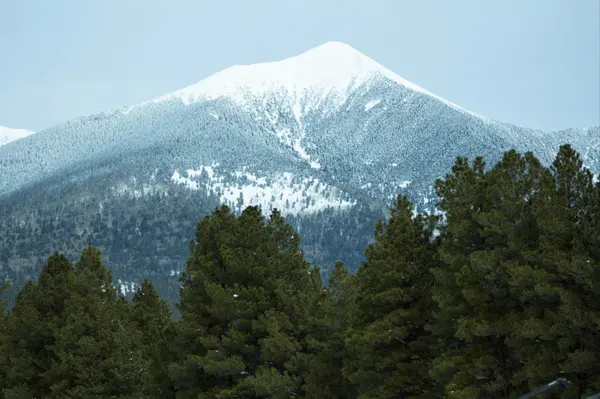
This is the reason most Valley buyers call us. Flagstaff sits at about 7,000 feet. Phoenix is about 1,100 feet and Scottsdale about 1,500. That gap shows up in every season.
| Flagstaff | Phoenix | |
|---|---|---|
| Elevation | About 7,000 ft | About 1,100 ft |
| Average July high / low | 82°F / 51°F | 106.5°F / 84.5°F |
| Average January high / low | 43°F / 18°F | 67.6°F / 46°F |
| Average yearly precipitation | 20.5 inches | 7.2 inches |
| Average yearly snowfall | 90.1 inches | None to speak of |
Sources: 1991 to 2020 climate normals. Flagstaff Pulliam Airport via the Arizona State Climate Office and NWS Flagstaff; Phoenix Sky Harbor via NOAA NCEI. Elevations from the Arizona Commerce Authority.
Average July high temperature
The number that sells most Valley buyers on Flagstaff
1991 to 2020 normals, NOAA and the Arizona State Climate Office.
Summer is the easy sell. Winter is the part we want you to picture clearly. January lows average 18°F, and you'll get roughly 90 inches of snow in a typical year (that's the National Weather Service's 30-year normal at the airport; some websites say 108, but we use the NWS figure). In our experience, snow melts off sunny streets and driveways pretty quickly, and a lot of our clients end up loving winter here. You just want to go in knowing it's real winter.
Monsoon season officially runs June 15 to September 30, and the National Weather Service says moisture usually reaches northern Arizona the first week of July. Expect afternoon thunderstorms most summer days in July and August. Much of the region gets 40% to 50% of its yearly precipitation during the monsoon.
Getting back to the Valley
Flagstaff is about 142 miles from Phoenix up I-17, and Discover Flagstaff puts the drive to Sky Harbor at around two hours. That's close enough for a lot of our clients to keep doctors and loved ones in the Valley while living up here.
The drive got better recently. ADOT announced the I-17 Improvement Project reached substantial completion in December 2025. It added a third lane each way between Anthem Way and Black Canyon City, and two "flex lanes" between Black Canyon City and Sunset Point. The flex lanes carry one direction at a time, usually northbound Monday through Saturday and southbound on Sundays (plus Mondays on holiday weekends).
Other ways down the hill:
- Flagstaff Pulliam Airport (FLG) says it has daily American Airlines flights to Phoenix Sky Harbor and Dallas/Fort Worth. If you fly often, connecting through PHX or DFW from FLG can save you the drive.
- Groome Transportation (formerly Arizona Shuttle) runs reservation-based shuttles between Flagstaff and Sky Harbor every day, with stops including NAU, Camp Verde and Metro Center in north Phoenix.
Before any winter drive, check az511.gov or the AZ511 app for road conditions. I-17 can close or slow down in storms, and we'd rather you hear it from us now than from a line of brake lights near Munds Park.
What homes cost
Here's how Flagstaff compares with the Valley and the other mountain towns Valley buyers ask us about. All five numbers come from the same source and the same time frame, so they're a fair side-by-side.
| City | Median sale price | Change vs a year earlier | Median days on market |
|---|---|---|---|
| Sedona | $1,022,024 | Down 11.6% | 53 |
| Scottsdale | $906,900 | Up 9.3% | 77 |
| Flagstaff | $699,537 | Down 0.1% | 33 |
| Prescott | $610,096 | Up 1.3% | 59 |
| Phoenix | $455,000 | Up 1.1% | 57 |
Source: Redfin city housing market pages, all home types, three months ending August 2026.
Median sale price, three months ending August 2026
Flagstaff sits between Phoenix and Scottsdale
Source: Redfin, all home types.
Two things jump out to us. Flagstaff homes are selling faster than in any of the other four cities, at a median of 33 days. And if you're coming from Phoenix, your budget will usually buy less house up here, often an older home or a smaller lot. Coming from Scottsdale, it tends to go a little further.
Lot size is a bigger deal here than most Valley buyers expect. It's become one of the most talked-about features with our buyers lately, and it varies a lot from one neighborhood to the next. Our Flagstaff neighborhoods by budget page breaks this down with real MLS numbers.
Taxes and everyday costs
Good news first: Arizona's income tax is a flat 2.5% for 2026, so moving within the state doesn't change it. And Arizona has no real estate transfer tax. The state constitution bars new taxes on the sale or transfer of real property.
Sales tax
You'll pay a little more at the register than you do in the Valley.
| City | Combined retail sales tax |
|---|---|
| Flagstaff | 9.386% |
| Phoenix | 9.10% |
| Scottsdale | 8.00% |
Source: Arizona Department of Revenue TPT rate table effective October 1, 2026 (state, county and city combined).
Property tax, and the one-primary-home rule
Arizona assesses both primary homes and second homes at 10% of their limited value, so the class itself doesn't change your assessment. What changes is a credit called the homeowner rebate. Under A.R.S. 15-972, the state pays half of the qualifying school district primary tax on a primary residence, up to $600 a year. Second homes don't get it.
You can only have one primary residence in Arizona. If you're keeping your Valley home and Flagstaff will be a second home, that matters. You'll mark your intended use on the Affidavit of Property Value at closing, and we'd talk it through with your CPA before then. Our second home guide goes deeper.
Utilities
Heating is the new line item. The City of Flagstaff handles water, sewer and trash. Natural gas in the area comes from UniSource Energy Services, and its 2026 rate information shows usage peaking around 101 therms in January and dropping to about 14 in July. So winter bills are noticeably higher than summer ones, roughly the reverse of a summer electric bill in the Valley.
Where to look by budget
This is where we can be the most help, because Flagstaff neighborhoods are very different from each other, and the differences don't always show up in listing photos. Some are newer construction with smaller lots. Some are older homes on big, treed lots. Some are out in the county with wells and septic. Some allow short-term rentals and many HOAs don't.
We built two pages to make this easier:
- Flagstaff neighborhoods by budget sorts 56 area neighborhoods into five price ranges using Flagstaff MLS sales.
- All Flagstaff neighborhoods has a full guide for each one, with prices, HOA details and lot sizes.
Our advice to Valley buyers is to pick two or three neighborhoods from those pages, then spend a weekend driving them at different times of day. Then call us and we'll tell you what the photos won't.
What surprises Valley buyers
None of these are deal breakers. They're just the things we wish someone had told every one of our Valley clients before their first winter.
- Winter street parking. From November 1 to April 1, Flagstaff bans parking on city streets and alleys from midnight to 7 a.m., snow or not, so plows can get through. Some downtown streets are 3 to 7 a.m. Cars can be ticketed, and towed during storms. If a home has a one-car garage and a short driveway, think about where all your cars go in January.
- You clear your own sidewalk. City code requires owners and occupants to clear the sidewalk next to their property within 24 hours after snow accumulates. Pushing snow into the street or alley isn't allowed.
- Plowing has an order. The city plows main roads, major hills, downtown, transit and school bus routes first. Neighborhood streets come second, with goals of 12 to 36 hours depending on snowfall, and after light snows (under about 3 to 4 inches) residential streets may not be plowed at all.
- Shopping is different. There's no Costco in Flagstaff. The closest is in Prescott, and others are in the north Valley. Flagstaff has a Sam's Club, and plenty of our clients do a big shopping run when they're down in Phoenix anyway.
- Insurance on forest-edge homes. Heavily treed homes backing to the forest can carry higher homeowners insurance premiums. We connect our clients with trusted insurance brokers early so a quote doesn't surprise anyone in escrow.
- Altitude. Give yourself a few days. Drink more water than you think you need, and expect your first hike or run to feel harder than it would in the Valley.
How we'd plan the move
Here's the order we walk our Valley clients through:
- Decide full-time or part-time. It changes your loan, your property tax and which neighborhoods make sense.
- Talk to a lender early. If you're buying before you sell in the Valley, ask about your options for carrying two homes. We're happy to introduce you to lenders we trust.
- Visit in winter if you can. If you love it in January, you'll love it in July.
- Narrow it to two or three neighborhoods. Use our budget page, then drive them.
- Book a strategy session with us. We'll walk you through our 12-step buying process, set up a search that matches what you actually want, and tell you what we see in each home that photos miss.
Frequently asked questions
How far is Flagstaff from Phoenix?
About 142 miles up I-17. Discover Flagstaff puts the drive from Sky Harbor at around two hours, and FLG also has daily American Airlines flights to Phoenix.
Is Flagstaff more expensive than Phoenix?
Homes are. Redfin's median sale price for the three months ending August 2026 was $699,537 in Flagstaff vs $455,000 in Phoenix. Flagstaff's combined sales tax is also slightly higher, 9.386% vs 9.10%.
How much snow does Flagstaff get?
The National Weather Service's 1991 to 2020 normal at Flagstaff's airport is 90.1 inches a year.
Do I pay more state income tax if I move to Flagstaff?
No. Arizona's 2026 income tax is a flat 2.5% statewide.
Can I keep my Phoenix home as my primary residence?
You can have only one primary residence for Arizona property tax. Whichever home isn't your primary is taxed as a non-primary residence and doesn't get the homeowner rebate. Talk to your CPA about which makes sense for you.
Let's plan your move up the hill
Tell us what you're hoping for in Flagstaff, full-time or part-time, and we'll help you narrow down neighborhoods, match the loan to the plan, and find an excellent home. Book a strategy call with Brannon and Matt.
More in this series
Sources
- Arizona State Climate Office, Flagstaff climate summary (1991 to 2020) and NWS Flagstaff, Northern Arizona Climate Statistics
- NWS Phoenix, 1991 to 2020 normals and NOAA NCEI monthly normals for Phoenix Sky Harbor
- NWS Flagstaff, Monsoon information
- Arizona Commerce Authority community profiles
- Discover Flagstaff, distances and air travel
- ADOT, I-17 Improvement Project substantial completion (December 2025)
- Flagstaff Pulliam Airport and Groome Transportation
- Redfin housing market pages for Flagstaff, Phoenix, Scottsdale, Sedona and Prescott (three months ending August 2026)
- ADOR TPT rate table (October 2026) and ADOR 2026 Form 140ES
- Arizona Constitution Art. IX, Sec. 24 and A.R.S. 15-972
- ADOR Abstract of the Assessment Roll, Tax Year 2026 and Maricopa County Assessor, legal class FAQ
- UniSource Energy Services 2026 gas rates and City of Flagstaff utility setup
- City of Flagstaff, Snow and Ice Operations, Clearing Sidewalks and Arizona Daily Sun on winter parking
- Costco Arizona warehouses and Sam's Club Flagstaff
This guide is general information, not tax, legal or lending advice. Prices, rates and rules change. Confirm the details for your situation with the right professional.
Categories
Recent Posts
Let's talk through your plan