
Living in Flagstaff Year-Round: What to Expect
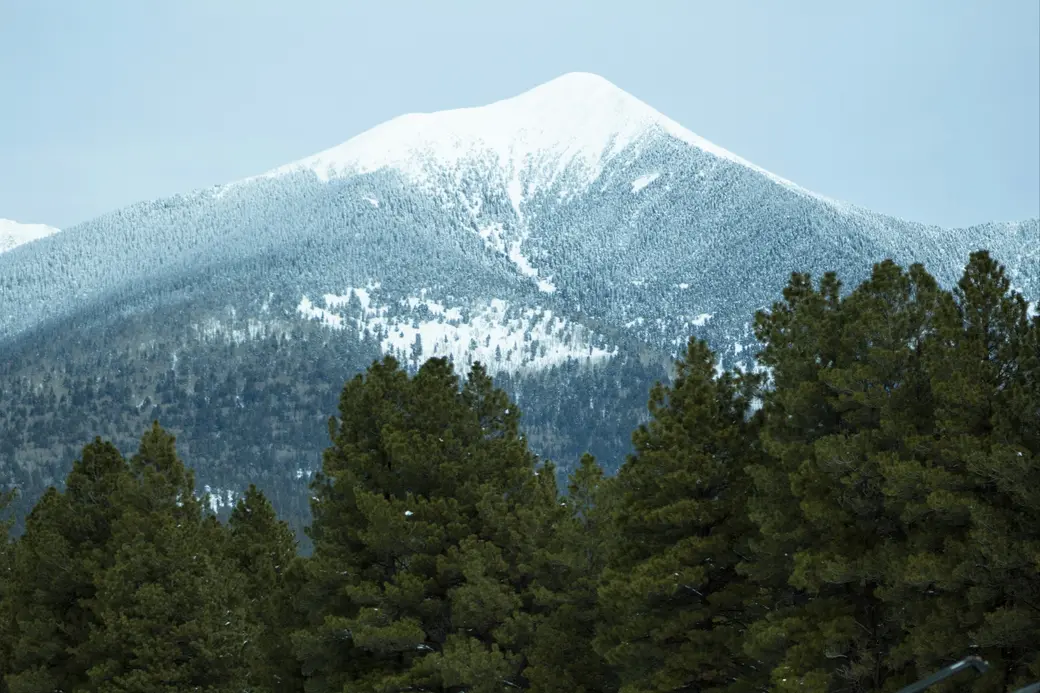
What's it really like to live in Flagstaff year-round?
You get four real seasons at about 7,000 feet: snowy winters (about 90 inches a year), warm days and cool nights in summer, and afternoon monsoon storms in July and August. Flagstaff is a regional hub for northern Arizona, with a Level I trauma center, a university, a commercial airport and most everyday shopping. Some things take adjusting to, like winter parking rules, clearing your own sidewalk, and the fact that the nearest Costco is in Prescott.
Data last verified October 2026
We love living here. It's why we built our business in Flagstaff. But a weekend visit and a full year are two different things, and we'd rather you know what January and July really feel like before you move.
This guide covers the day-to-day: weather, winter, getting around, healthcare, shopping and the little things our clients wish they'd known sooner.
It's part of our complete guide to moving to Flagstaff.
In this guide
The seasons
| Flagstaff | Average high | Average low |
|---|---|---|
| January | 43°F | 18°F |
| July | 82°F | 51°F |
Source: 1991 to 2020 normals, Arizona State Climate Office. Yearly averages: 20.5 inches of precipitation and 90.1 inches of snow (NWS Flagstaff).
Winter brings real snow, and in our experience it often melts off sunny streets and driveways within a few days. Arizona Snowbowl's ski season typically runs from mid-November into May.
Spring is changeable. A warm week followed by a late snow isn't unusual here.
Summer is why a lot of Valley folks come up. Highs average in the low 80s in July, and nights cool into the 50s. Monsoon season officially runs June 15 to September 30, and moisture usually reaches northern Arizona the first week of July, bringing afternoon thunderstorms most days through August. The National Weather Service says much of the region gets 40% to 50% of its yearly precipitation in the monsoon.
Fall might be our favorite. Cool, clear days, and the Forest Service says fall color in the high country near Flagstaff usually peaks in early October.
Winter, practically
None of this is hard once you know it. It's just different from the Valley.
- Winter parking. From November 1 to April 1, the city bans parking on city streets and alleys from midnight to 7 a.m., snow or not, so plows can work. Some downtown streets are 3 to 7 a.m. Cars can be ticketed, and towed during storms. When you look at homes, think through where your cars will go in winter.
- Sidewalks. City code gives owners and occupants 24 hours after snow accumulates to clear the sidewalk next to their property, and you can't push snow into the street or alley.
- Plowing. The city plows main roads, major hills, downtown, transit and school bus routes first. Neighborhood streets come second, with goals of 12 hours for 3 to 8 inches of snow (in January and February), 18 hours for 8 to 12 inches, and 36 hours for more than 12. After lighter snows, residential streets may not be plowed at all. On city streets, Flagstaff uses cinders rather than chemical de-icers.
- Driveway direction matters. A south-facing driveway gets more sun and tends to clear on its own faster. It's an easy detail to miss when you're coming from somewhere warm, so keep an eye on it during showings.
- Your car. We'd recommend good all-season or snow tires and checking az511.gov or the AZ511 app before driving I-17 or I-40 in a storm.
Getting around and getting out of town
- Phoenix is about 142 miles down I-17, and Discover Flagstaff puts the drive to Sky Harbor at around two hours. ADOT finished the I-17 Improvement Project's major work in December 2025, adding lanes between Anthem and Sunset Point.
- Flagstaff Pulliam Airport (FLG) says it has daily American Airlines flights to Phoenix and Dallas/Fort Worth. In September 2026 the airport received an $800,000 federal grant to try to attract a nonstop route to Denver or Salt Lake City.
- Groome Transportation runs daily shuttles to Sky Harbor by reservation.
- Amtrak's Southwest Chief stops in Flagstaff twice a day.
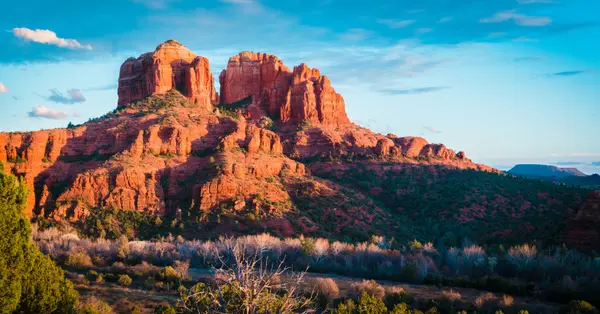
- Sedona is about 30 miles away, and the Grand Canyon about 80.
Healthcare
Flagstaff Medical Center, run by Northern Arizona Healthcare, is the only Level I trauma center north of Phoenix. That's a big reason Flagstaff works as a full-time home for a lot of our clients, not just a getaway.
Northern Arizona Healthcare has talked for years about building a new hospital. As of February 2026, it said it still sees the need but couldn't yet announce a site or timeline while it reviews its finances. The current hospital continues to operate.
Shopping and errands
Flagstaff covers most everyday needs. Walmart lists two stores in town, and there's a Sam's Club on East Butler Avenue. There's no Costco in Flagstaff; the nearest is in Prescott, and there are more in the Phoenix area. A lot of our clients plan a big shopping run when they're already headed down the hill.
Flagstaff's combined sales tax is 9.386%, a little higher than Phoenix (9.10%) and Scottsdale (8.00%), per the Arizona Department of Revenue's October 2026 rate table.
Utilities and setting up your home
- Water, sewer and trash come from the City of Flagstaff. Setting up a residential account costs $50.85 (a $24 service charge plus tax and a $25 refundable deposit), and the city asks for 24 hours' notice.
- Natural gas comes from UniSource Energy Services. Its 2026 rate information shows usage peaking around 101 therms in January and dropping to about 14 in July, so expect your gas bill to peak in winter.
- Electricity in Flagstaff comes from APS.
If you're buying an older home, ask about insulation, windows and the age of the furnace or boiler. Those make a real difference in a Flagstaff winter, and we'll help you look for them on every showing.
The outdoors and the night sky
This is the part that makes the winters worth it for us. Arizona Snowbowl has 777 acres and 61 runs, with lifts topping out at 11,500 feet. There are trails all around town for hiking, running and biking.
Flagstaff was also named the world's first International Dark Sky Place in 2001. The city works to keep its night sky dark, and on a clear night the stars here are something special.
Frequently asked questions
How cold does Flagstaff get in winter?
January averages a high of 43°F and a low of 18°F at the airport (1991 to 2020 normals).
How much snow does Flagstaff get a year?
About 90 inches on average, per the National Weather Service's 1991 to 2020 normal at Flagstaff's airport.
Is there a Costco in Flagstaff?
No. The nearest Costco is in Prescott. Flagstaff has a Sam's Club.
Does Flagstaff have a hospital?
Yes. Flagstaff Medical Center is the only Level I trauma center north of Phoenix, according to Northern Arizona Healthcare.
Can I park on the street in Flagstaff in winter?
Not overnight. From November 1 to April 1, parking on city streets and alleys is banned from midnight to 7 a.m., with some downtown streets 3 to 7 a.m.
Thinking about making Flagstaff home?
We'd love to show you the neighborhoods that fit how you want to live here, all year long. Book a strategy call with Brannon and Matt.
More in this series
Sources
- Arizona State Climate Office, Flagstaff (1991 to 2020), NWS Flagstaff climate statistics and NWS monsoon information
- City of Flagstaff, Snow and Ice Operations, Clearing Sidewalks and Arizona Daily Sun on winter parking
- ADOT Know Snow (December 2025) and I-17 Improvement Project (December 2025)
- Flagstaff Pulliam Airport, AZFamily on the air service grant (September 2026) and Groome Transportation
- Discover Flagstaff transportation, air travel and distances
- Northern Arizona Healthcare trauma services and new hospital update (February 2026)
- Walmart Arizona directory, Sam's Club Flagstaff and Costco Arizona
- ADOR TPT rate table (October 2026)
- City of Flagstaff utility setup, UniSource 2026 gas rates
- Arizona Snowbowl mountain information and DarkSky International, Flagstaff and Coconino National Forest fall colors
This guide is general information. Rules, schedules and rates change. Confirm current details with the city, your utilities and the airport.
Categories
Recent Posts

Let's talk through your plan